

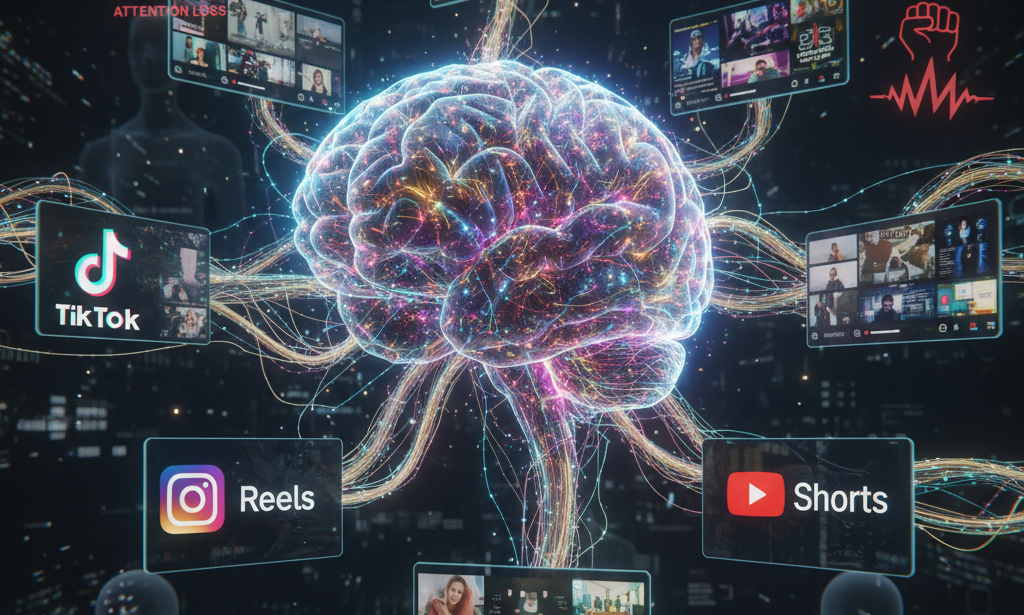

In the age of social media, short-form videos such as TikTok clips, Instagram Reels, and YouTube Shorts have become a dominant form of entertainment. These videos are designed to be fast-paced, visually stimulating, and instantly rewarding. While they provide quick bursts of entertainment, researchers are increasingly concerned about their impact on our brain, particularly on attention span, cognitive control, and mental health.
Short videos exploit the brain’s reward system, primarily through the release of dopamine, a neurotransmitter associated with pleasure and motivation. Each swipe or new video acts as a small reward, creating a cycle of instant gratification. Over time, the brain adapts to these rapid rewards, making slower, more demanding tasks seem less engaging. This constant stimulation can lead to difficulties in maintaining attention for longer periods, affecting both work and study performance.
Attention span is the brain’s ability to focus on a single task without being distracted. Frequent consumption of short videos can fragment attention, making it harder to concentrate on tasks that require sustained mental effort. Studies suggest that the brain can become habituated to fast-paced content, reducing tolerance for slower, deeper cognitive processes. This often results in mental fatigue, as the brain struggles to switch between high-stimulation entertainment and low-stimulation real-world tasks.
The rapid influx of audio-visual stimuli from short videos can overstimulate the brain. Constant novelty new sounds, colors, and scenarios requires the brain to process information at a higher pace than usual. Over time, this overstimulation can increase stress levels and reduce emotional regulation, making individuals more prone to impatience, irritability, and mood swings. Additionally, the habit of seeking instant rewards may reinforce impulsive behavior in daily life.
While short videos can be entertaining and educational, excessive use can negatively affect mental well-being. Reduced attention span, decreased cognitive endurance, and heightened stress are common outcomes. Moreover, the cycle of constant dopamine hits can contribute to compulsive media consumption, reinforcing dependency and reducing the ability to enjoy slower, meaningful activities.
To minimize the cognitive costs of short-form videos, experts recommend setting boundaries on usage, taking regular breaks, and practicing focused activities such as reading or meditation. Mindful consumption allows the brain to rest and recalibrate, improving focus, emotional regulation, and overall mental resilience.
Conclusion
Short-form videos like TikTok, Reels, and YouTube Shorts offer instant entertainment, but they come with a cognitive cost. By constantly stimulating the brain and providing rapid rewards, they can reduce attention span, increase mental fatigue, and affect emotional regulation. Awareness of these effects and mindful usage can help individuals enjoy digital content without compromising focus, productivity, and mental well-being. Striking a balance between short-form entertainment and activities that require sustained attention is key to preserving brain health in today’s fast-paced digital world.

You must be logged in to post a comment.