

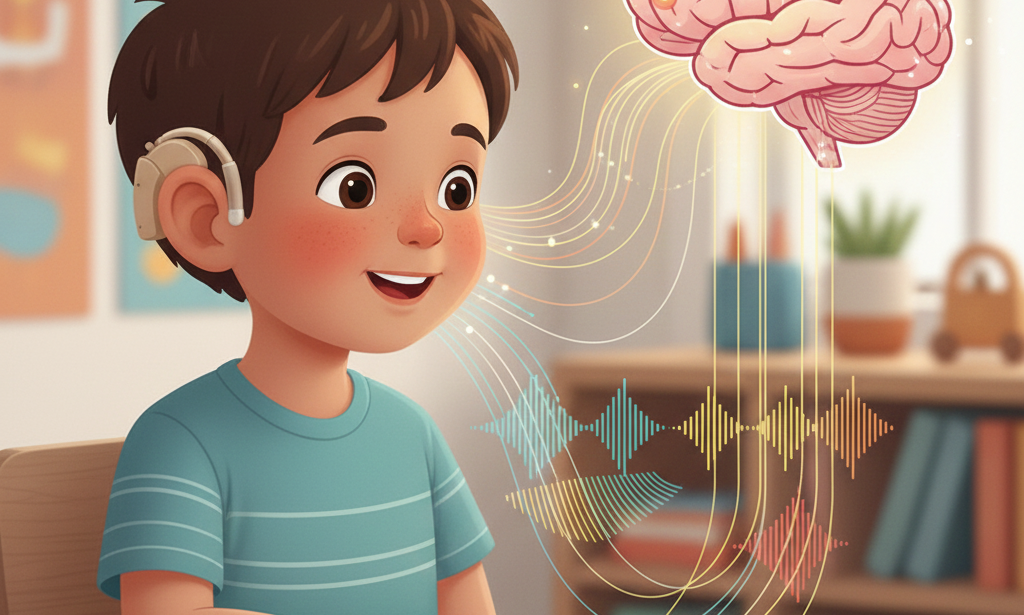

Understanding Ling Six Sounds
The Ling Six Sounds are six simple speech sounds /m/, /a/, /i/, /u/, /ʃ/ (sh), and /s/ used in audiology and speech therapy to check a child’s ability to hear across the speech frequency range. These sounds were carefully chosen because they cover low, middle, and high frequencies that are essential for understanding speech. For children with normal hearing or those using hearing aids or cochlear implants, listening to these sounds helps professionals verify that the child can detect the entire range of speech sounds.
Each sound provides unique information. Low-frequency sounds like /m/ test the child’s ability to hear bass tones, while high-frequency sounds like /s/ check whether the child can hear the soft, sharp sounds that are crucial for consonant recognition. The mid-range vowels like /a/, /i/, and /u/ represent the common vowel sounds in speech. Practicing these sounds daily helps children strengthen their auditory attention, improves listening skills, and ensures consistent exposure to the full spectrum of speech.
Why Ling Six Sounds Are Important for Brain Development
When a child hears these sounds repeatedly, the brain begins to map them efficiently. Each frequency stimulates specific auditory pathways, teaching the brain to distinguish pitch, tone, and clarity. This process, called auditory brain mapping, is especially important for children with hearing loss. By regularly detecting and responding to all six Ling sounds, children train the brain to recognize subtle differences in speech, which later improves speech perception, pronunciation, and language comprehension.
Predicting Long-Term Speech Perception
Regular use of Ling Six Sounds can predict how well a child will understand speech in noisy environments or with rapid conversations. When a child consistently hears and responds to the full range of sounds, clinicians can be confident that speech therapy and hearing devices are effective. Conversely, difficulty detecting certain Ling sounds may indicate that the hearing device needs adjustment or that specific auditory training is required. Early identification of these gaps helps prevent delays in language development.
Enhancing Auditory Skills at Home
Caregivers can also practice Ling Six Sounds at home to reinforce therapy. Simple activities include repeating the sounds during playtime, reading aloud while emphasizing specific sounds, or encouraging the child to point to objects or letters that match the sound. These small daily exercises boost the child’s auditory memory, strengthen sound discrimination, and build confidence in listening skills.
Conclusion
The Ling Six Sounds are more than a clinical tool they are a window into the child’s auditory world. By covering the full speech frequency range, these sounds help map the brain’s auditory pathways, improve early listening skills, and predict long-term speech perception. For children with hearing challenges, consistent practice with Ling Six Sounds is a critical step in building clear, confident communication and ensuring optimal language development.

You must be logged in to post a comment.