

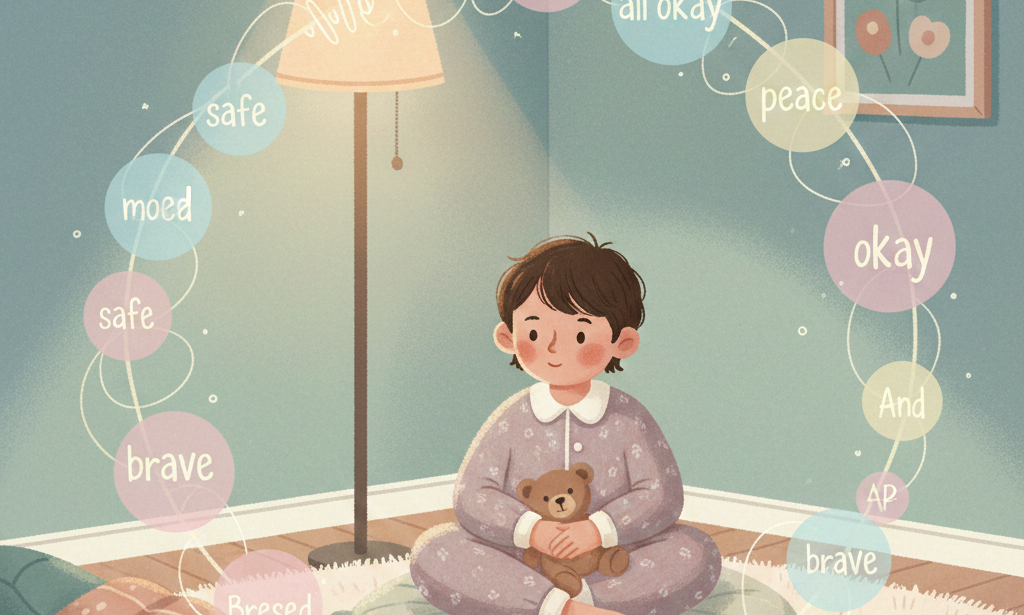

Echolalia is often misunderstood as just repetition, but for many children especially those navigating sensory challenges or communication delays it becomes a quiet shelter in a loud world. Today’s environment is filled with nonstop information, background noise, fast visuals, and unpredictable social expectations. For a child who already struggles to process sensory input, the world can feel chaotic. Echolalia, in many cases, is the child’s way of creating a small island of familiarity, rhythm, and control.
Children repeat words, phrases, or sounds not because they lack understanding, but because these sounds feel safe. A repeated phrase carries a predictable pattern, and predictability feels comforting when everything else is overwhelming. What adults see as “meaningless repetition” may actually be a child building emotional stability inside their mind. Their brain takes an external sentence, holds it tight, and uses it like a self-soothing tool.
A Safe Script in a Loud World
Modern environments overstimulate children in ways previous generations didn’t experience. Constant cartoon sound effects, sudden changes in digital content, and busy classrooms all push the child into sensory overload. Echolalia then becomes a grounding strategy. The child holds onto a script something they heard before, maybe from a parent, teacher, or favorite show and uses that script to bring structure back into their thoughts. It is like pressing pause on the world while pressing play on something they understand.
Emotional Regulation Through Familiar Sounds
Many children use echolalia as emotional regulation without even realizing it. When anxious, they might repeat comforting lines. When excited, they may echo phrases that match their energy. The repetition gives them a reliable emotional anchor. Adults use similar habits—humming, tapping, repeating motivational lines so echolalia is not strange, it is simply a different form of self-regulation.
A Bridge Toward Real Communication
Instead of blocking communication, echolalia often becomes the pathway toward it. Children use repeated phrases to express needs, start interactions, or join social moments. A child who echoes “Want juice?” may actually be saying “I want juice.” When adults respond with patience, the child gradually learns to modify the script and add original words. Over time, echolalia transforms from emotional safety into meaningful communication.
Understanding Helps Children Grow
The more adults understand the emotional purpose behind echolalia, the more supportive the environment becomes. Instead of stopping the repetition, responding gently and modeling natural language helps the child feel safe enough to learn. Emotional safety always comes before language development. When a child feels understood, their communication naturally begins to expand.
Conclusion
Echolalia is not just repetition, it is comfort, connection, and emotional safety. In an overstimulating world where children face constant sensory and social challenges, repeating familiar words gives them control and calm. When adults recognize these repetitions as meaningful and supportive, they open the door for the child to grow confidently into more flexible communication.

You must be logged in to post a comment.